Exhibition
Eternal Engine, John Duncan, Zuza Golińska
The accompanying exhibition to Sanatorium of Sound is an integral extension of this year’s festival theme. It is an autonomous yet closely connected space that expands cognitive and bodily experience—taking us beyond sound understood in a literal sense, but not beyond its material, affective presence. Here, sound—like the body—exists as a tangible tension, stretched between the individual and space, between what is audible and what is felt through the skin, muscles, and breath.
The exhibition portion of Sanatorium does not directly comment on the phenomenon of sound. Instead, it foregrounds parallel spaces of corporeality—treating them as the festival’s primary somatic tone and affective narrative axis. It is a different language, yet nearly the same matter: tension, presence, boundaries—including those blurred between the real and the symbolic. The body we encounter here is not always easily decipherable—its identity, status, and belonging dissolve between the physical and the represented, the mediated.
This ambiguity generates a different, communal affective spectrum. Resonance between bodies—like sound—can sometimes be tangible, physical, almost immediate. Other times, it takes the form of an agreement, a delicate understanding negotiated between the real and the mediated, the abstract, the personal. This year’s festival focuses on the corporeality of sound—sound as a real, physical process propagating through space, as a phenomenon that cannot exist apart from bodies, surfaces, and architecture. The exhibition complements this perspective by presenting three artistic gestures that approach corporeality differently—through image, structure, and virtuality. Here, we see three radically different representations of the body and its boundaries:
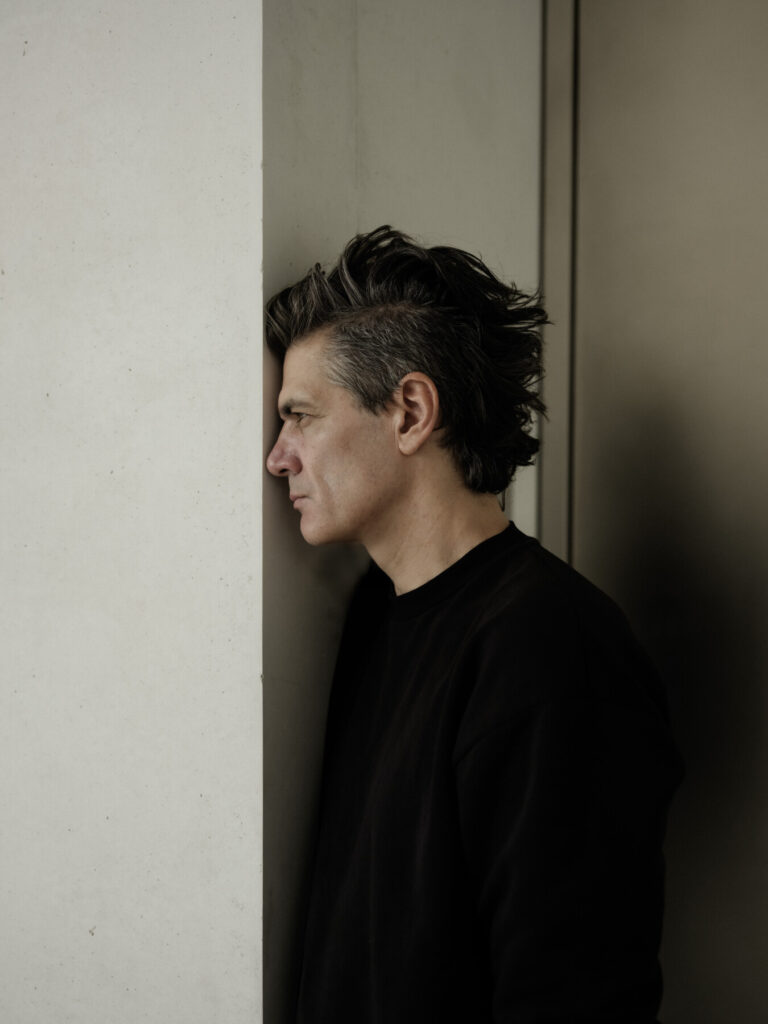
John Duncan’s Jurassic is an intense, hypnotic film that, in its seemingly minimalist form, reveals the full complexity of corporeality and affective tension present in the human face, gaze, and body exposed to observation. The work is based on 1974 footage by Stephen Dwoskin—an artist whose films explored the boundaries of intimacy and presence with extraordinary precision. Duncan distills the source material to its essence, focusing on the physicality of the figures—their exhaustion, micro-gestures, and tension. In the raw, wordless space of the club, an ambiguous, fragile sense of community emerges—not from shared action or agreement, but from the mere fact of co-presence, exchanged glances, and silent togetherness. It is a model of community typical of performance—one based not on declaration but on presence, on the quiet tension between individuals who co-create the space.
Please Be Tender With My Data by the duo Eternal Engine is an immersive installation where technology meets corporeality in its most unexpected, virtual dimension. The work transports us to a queer space where data, images, and avatars become vessels of intimacy—a site of encounter, connection, and sensual tension. Here, the digital is not separate from the body. The installation dissolves rigid boundaries between the physical and the virtual, treating data as an extension of corporeality—just as fragile, susceptible to touch, and saturated with presence. Technology here does not create distance; on the contrary, it becomes a space for new forms of relation and tenderness.
Please Be Tender With My Data opens a parallel path for thinking about the body—beyond biology, beyond physical touch. It is a micro-metaverse where digital being does not exclude sensuality, and where body and data circulate between one another—like sound spreading through space, like the tension between presence and its absence.
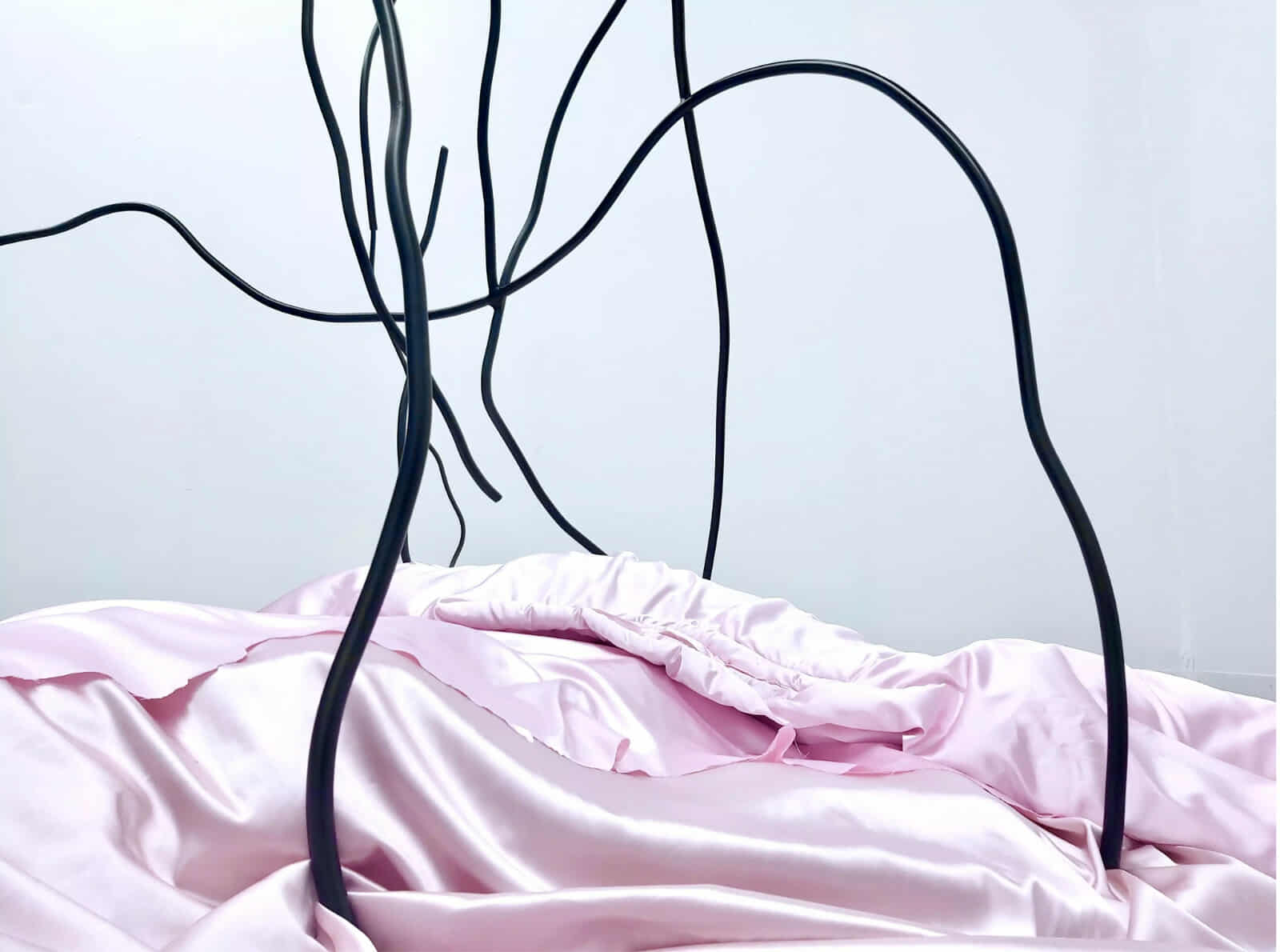
The exhibition is completed by a new spatial work by Zuza Golińska, which anchors the arrangement by introducing sculpture as a material reference point—a presence in relation to which our bodies must position themselves, finding distance or closeness. Golińska consistently works with form and materials that provoke bodily tensions—steel, fabric, industrial materials juxtaposed with softness and textures associated with the body. Her practice is rooted in the experience of physical presence in space—not abstract, but concrete, material, grounded in weight, edges, the coldness of metal, and the softness of textiles. Golińska’s works construct an architecture of tension between the hard and the sensitive, between form and gesture, between space and the body that inevitably comes into contact with it.